
Imagine your dinner plate. Picture the vibrant red of the strawberries and the crunch of the almonds in your salad, the bright red and yellow of the roasted bell peppers, the caramelized zucchini and rainbow carrots, drizzled with parmesan cheese, that garnish your meal. Now, imagine if one-third of that plate vanished.
This isn't a scene from a dystopian novel; it’s a very real snapshot of what our world would look like without the honeybee.
Tomorrow morning, the changes continue. No more blueberries in your muffins, no more coffee to start your morning, and no more clover to feed the cattle that provide our dairy.

I’ve spent the last 14 years as a beekeeper, and if there is one thing I have learned while standing in the middle of my buzzing apiary, it's that these creatures are the "quiet architects" of our modern world. They are a keystone species—a species our farms and ecosystems quietly depend on. From the $15 billion they add to the U.S. agricultural economy –according to the USDA– to the nuts-and-berries-filled landscapes they create to support wildlife, their work is the invisible thread that holds our food systems together.
If honeybees disappear, blueberries will vanish from the average table, transforming from a common snack into a luxury reserved only for the wealthy.
Protecting Our Future: Why We Need Honeybees for a Healthy Ecosystem
If you are concerned about the future of our ecosystems, you aren't alone; the stakes have never been higher. However, to truly appreciate the honeybee, we have to look beyond the hive. After over a decade of checking frames and watching colonies thrive and struggle, I’ve seen firsthand that while honeybees are the unsung heroes of our food system, they work side-by-side with a whole world of other creatures that nature depends on.
In this article, I’ll break down exactly why honeybees matter to our food supply, our economy, and our ecosystems — and what their future means for ours.
At a Glance:
|
How Honeybees Power Global Agriculture and Our Food Supply
To understand the sheer scale of honeybee pollination, you have to look beyond a single backyard hive. In the world of commercial beekeeping, the numbers are staggering. I’m a member of the Essex Chapter of the New Jersey Beekeepers Association, where I’ve had the chance to learn from experts like Grant Stiles, a commercial beekeeper who manages over 4,000 hives.

To put that in perspective, while I can spend two hours checking a handful of backyard hives and creating social media content, Grant’s bees are part of a massive, coordinated effort to feed the country. Each year, hundreds of thousands of hives like his are moved across state lines to meet the blooming cycles of different crops. This "hives on trucks" system is the engine that keeps our grocery stores stocked.
The Traveling Pollinators
Honeybees are uniquely suited for this work because they live in large, transportable colonies. This allows beekeepers to provide pollination services exactly when and where they are needed most:
-
Almonds: Every February, a huge portion of the nation’s honeybees—including many from right here in Jersey—travel to California. Almonds are almost 100% dependent on honeybees for pollination. And once the almonds are done blooming, there’s nothing else for the bees to eat.
-
Blueberries & Cranberries: Closer to home, honeybees are essential for the fruit industry. Without them, these berries wouldn't exist in the copious amounts we became accustomed to.
-
Pumpkins and Squash: Large-scale pumpkin patches require a high density of pollinators to ensure every flower turns into a fruit. Next time you carve a Jack-O-Lantern, thank the bees!
In the United States alone, honeybees contribute to over $15 billion in crop value annually. This isn't just about "saving the bees"—it's about economic stability. When a beekeeper moves thousands of hives into an orchard, they aren't just bringing insects; they are bringing a guarantee that the farmer will have a harvest, the consumer will have affordable food, and the beekeeper will still have bees.
The logistics of this partnership can be incredibly delicate. At one of our Essex County Beekeepers Society meetings, guest speaker and Florida commercial beekeeper Tim Stewart shared the uphill battle he often faces: convincing farmers to pause pesticide applications while his hives are on-site. It’s a dangerous timing conflict—farmers often spray when trees are in full bloom to protect their crops, but that is when bees are most active in the orchard. Navigating this balance is a constant negotiation to ensure that the very insects brought in to save the harvest aren't accidentally caught in the crossfire.
Having spent 14 years in the bee yard, I can tell you that the logistics of this system are intense. It’s a partnership between the bees, the beekeepers, and the farmers that ensures our food supply remains resilient, even as we face growing environmental challenges.
Honeybees contribute $15 billion annually to the U.S. economy by pollinating one-third of our food supply.
Why do we need honeybees to pollinate almonds? Can the local pollinators take care of it?
California grows 80% of the world’s almonds. On these massive farms, you might see 30,000 acres of nothing but almond trees. This is called a monoculture, and it’s very hard on local "wild" bees.
Think of it like this: for two weeks in the spring, there is a massive "all-you-can-eat" buffet of almond flowers. But for the other 50 weeks of the year, the farm is like a desert with almost nothing for a local bee to eat. Because native bees can't survive that "feast or famine" cycle, we have to bring honeybees in on trucks when the flowers bloom and move them out once the work is done. This is the only way we can grow food on such a giant scale.
More Than Just Pollination: Products and Biodiversity
While the honeybee’s most vital work happens quietly in the fields, the hive itself is a factory of incredible natural resources. Most people think of honey first—and for good reason—but after 14 years of beekeeping, I’ve learned that every substance these bees produce is a gift of engineering and chemistry.
The Power of Hive Byproducts
Beyond the jar of honey on your kitchen table, bees provide us with a variety of specialized materials that have been used in medicine, food, and skincare for millennia:

-
Honey: A natural humectant and antibacterial powerhouse. Did you know that honey is used in wound dressing?
-
Beeswax: The structural foundation of the hive, used to create everything from candles to waterproof coatings.
-
Propolis: Often called "bee glue," this resinous mixture is a natural antibiotic the bees use to seal the hive.
-
Royal Jelly: A nutrient-dense substance used to raise queen bees, prized in the cosmetics industry.
Crafting a Sustainable Future
To support our beekeeping business and ensure our hives have the resources they need to thrive year-round, we’ve leaned into the incredible versatility of these materials. For me, it isn’t just about harvesting; it’s about honoring the bees' hard work by turning it into sustainable, everyday products.
By utilizing the clean, golden wax and raw honey from our own colonies, we’ve developed a line of handcrafted bath and body products that help reduce our environmental footprint:
-
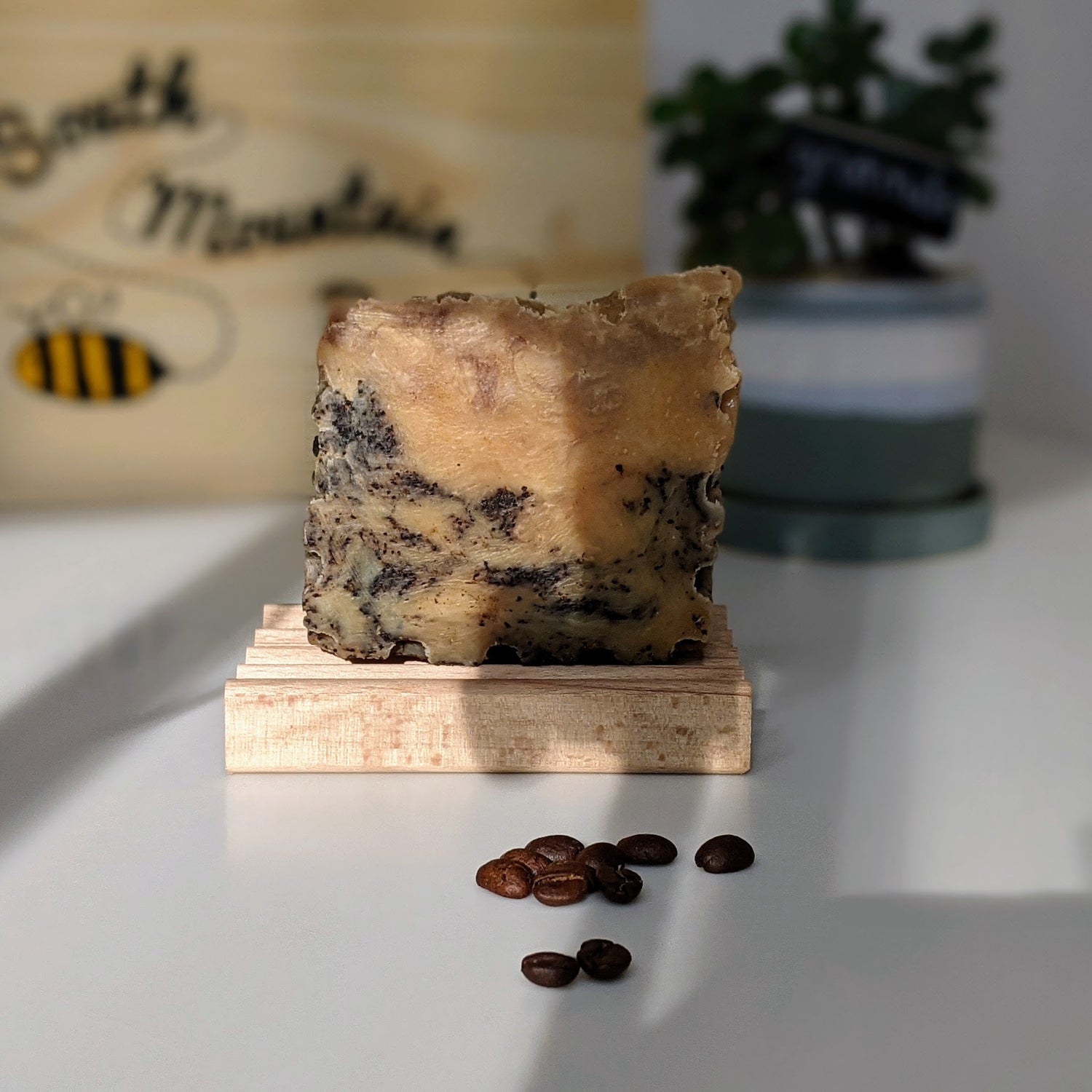
Honey Soaps: Infused with raw honey, these soaps offer natural moisturizing properties that synthetic bars can't match.
-
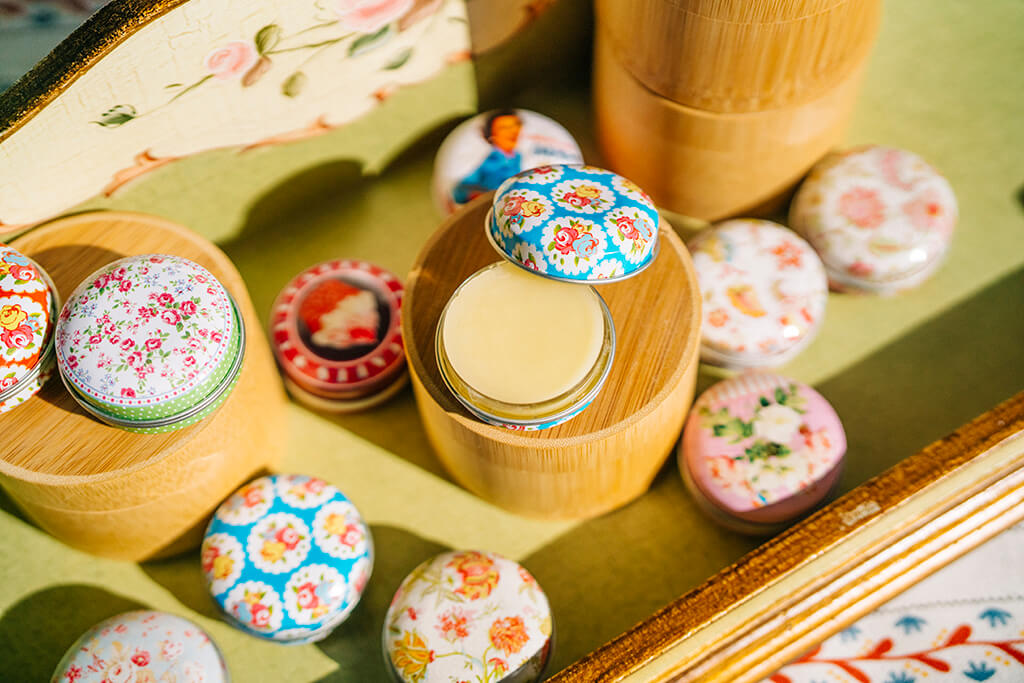
Beeswax Lip Balms: Wax from our bees creates a natural barrier that protects the skin without the need for petroleum-based ingredients.
-
Solid Shampoo Bars: Rich in beeswax and honey as stabilizers and conditioners, offering a plastic-free alternative to bottled hair care.
Supporting a beekeeping business by purchasing these products does more than give you a better skincare routine—it directly funds the protection and maintenance of the very colonies currently out there pollinating your next meal.
Honeybees vs. Native Bees: A Beekeeper’s Perspective on Biodiversity
In certain conservation circles, there is a lingering concern that honeybees—especially when managed in large numbers—might outcompete or "crowd out" our local native pollinators. It’s a valid question: if I put a hive in my backyard, am I taking food away from the native bumblebees or mason bees?
After more than a decade of working with these colonies and following the latest apiary science, I’ve found that the "honeybee vs. native bee" debate is often more about myth than reality.
Setting the Record Straight: "Honeybees Do Not Bully"
To find the truth, we look to researchers like Dr. Diana Cox-Foster, Adjunct Professor of Entomology at Penn State College of Agricultural Sciences and a preeminent entomologist whose work has been instrumental for beekeepers.

I had the privilege of hearing her speak at the Eastern Apicultural Society (EAS) 2025 Conference, and I can tell you, her findings were a revelation. For years, beekeepers have sat in the "hot seat," wondering if our managed hives were inadvertently harming wild species. Hearing her present solid research to debunk the myths about honeybees negatively impacting native bees was a much-needed sigh of relief for those of us worried about biodiversity. (Video of the same talk at a different venue: Interaction among bee species.)
Dr. Cox-Foster conducted extensive multi-year studies to determine whether honeybees negatively impact native species. Her team looked at this interaction in several environments:
-
Controlled "Cage" Environments:
Researchers intentionally cut back on available food for the study, and they found that every type of bee was affected, not just the native ones.
-
Field Studies in Utah:
Dr. Cox-Foster's team placed honeybees, bumble bees, and solitary bees in areas with a long history of honeybee farming and also in landscapes where managed hives had never been introduced. There was no negative impact of honeybees on native species.

Even with a whopping 4 million honeybees (48 managed colonies) added to each field site, the results were consistent: honeybees did not push out the locals. As Dr. Cox-Foster concluded, "Honeybees do not bully other bees."

The Real Culprit: Resource Depletion
If it isn't the honeybees causing the struggle for our native pollinators, what is? During her fieldwork, Dr. Cox-Foster witnessed how human land use and livestock management do far more damage to the "pollinator pantry" than any beehive ever could. She observed several ways that natural resources are stripped away:
-
Dust Clouds:
In recreational areas, large SUVs traveling on dirt roads kick up massive clouds of dust. This dust settles on wildflowers, physically coating the nectar and pollen and rendering the flowers "invisible" or unavailable to bees. -
Overgrazing by Sheep:
Sheep are efficient eaters—sometimes too efficient. Dr. Cox-Foster noted that sheep often eat every single flower in a pasture, removing valuable forage that never gets a chance to rebloom. -
Cattle Trampling:
While cattle are searching for food, their sheer weight and movement can destroy delicate native plants, crushing the very habitats that ground-nesting bees and wildflowers depend on.
Key Takeaway: Habitat quality matters more than bee competition.
A Partnership, Not a Competition
What I’ve observed in my own bee yards mirrors this research. Nature is surprisingly good at sharing, provided there is actually something to share.

Instead of seeing honeybees and native bees as rivals, we should view them as a diversified team.
- Honeybees provide the sheer numbers needed for large-scale agriculture (like Grant Stiles' 4,000 hives).
-
Native Bees (like Blue Orchard or Squash bees) are often more efficient at pollinating specific local plants or working in conditions honeybees don't like.
The takeaway is clear: the threat to our pollinators isn't the presence of honeybees; it’s the destruction of their habitat. When we provide diverse, dust-free, and carefully managed landscapes, there is more than enough "room at the table" for everyone.
The handful of hives managed by a backyard beekeeper does not pose a threat to the survival of native bumblebees or mason bees. Supporting beekeepers helps maintain these managed colonies. Our goal shouldn't be to choose one species over another, but to create living landscapes that support the entire pollinator team.
Why Bee Populations are Declining: Habitat Loss, Pesticides, and Climate Change
After 14 years of beekeeping, I’ve seen that the "buzz" in our gardens is getting quieter. It isn’t just bad luck; our pollinators are facing a "Perfect Storm" of challenges. In the beekeeping world, we often talk about the "Big Four" threats that are pushing both honeybees and native species to the brink.
A Vanishing "Wonderland"

I’ve witnessed this decline firsthand in my own vegetable patch. Ten years ago, opening the garden gate was an Alice in Wonderland moment. At least a dozen butterflies—Monarchs, Tiger Swallowtails, and Checkered Whites—would flutter all around me in a whirlwind of color.
Through the years, I watched that magic dwindle. Now, days and even weeks go by without a single butterfly sighting. Today, seeing just one is a cause for celebration, but it's also a heartbreaking reminder of how much we’ve lost in a short decade.
1. The Fight for Survival: Varroa Destructor
One of the biggest hurdles for beekeepers today is a tiny parasite called Varroa destructor. This mite is smaller than a pinhead, but its impact is massive. It doesn't just hitch a ride; it actually feeds on the honeybee’s organs (yikes!) and acts as a vector, spreading devastating diseases throughout the hive.
Managing this pest has become a full-time battle. When I first started beekeeping in 2012, the common practice was to treat for Varroa once a year in the early fall. But as the mites have become more resilient, we’ve had to increase our interventions just to keep the bees alive. Now, we are performing 4 or 5 treatments a year, starting in the late winter and continuing all the way until we tuck the hives away in late fall. Without this constant care, honeybee colonies simply wouldn't survive.
2. Habitat Loss: The Vanishing Pantry
Bees and butterflies need a diverse diet of pollen and nectar. As we replace wild meadows with paved lots and "perfect" green lawns, we are removing their grocery stores. When there are no flowers, there is no life.
3. Pesticide Use: The Danger in Our Backyards

While many blame large-scale farming, some of the biggest threats are in our own neighborhoods. At the 2024 winter meeting of the New Jersey Beekeepers Association (NJBA), Chelsea Abegg shared how ready-to-use pesticides available to the public are significantly more lethal to bees than products used in agriculture. Similarly, suburban mosquito services (like Mosquito Squad or GreenShield) often use chemicals in much higher concentrations than professional farmers. These sprays don’t just kill mosquitoes; they drift onto flowers, killing the bees and butterflies that visit them.
4. Climate Change: The "False Spring" Problem
Warmer winters trigger ground-nesting bees to hatch earlier than they should. If a bee wakes up in February because it’s 60°F, but the flowers don't bloom until April, that bee will starve. This "mismatch" in timing is devastating for native populations.
The Ripple Effect: Why This Matters to You
If these populations continue to decline, the impact won't just be felt by beekeepers; it will hit your wallet and your dinner table.
-
Food Costs:
As pollination becomes more difficult, the price of fruits and vegetables will skyrocket. -
Ecosystem Collapse:
Without pollinators, the wild plants that feed our birds and stabilize our soil will disappear.
While we often focus on honeybees for the fruits and vegetables on our tables, the stakes are even higher in the wild. Most wild plants rely on pollinators to produce seeds, which are the only way to ensure a "next generation" of growth. Without bees and butterflies to carry pollen, these plants cannot reproduce. When the current generation of plants eventually reaches the end of its life without leaving seeds behind, the entire habitat—and the birds and animals that depend on it for food and shelter—slowly fades away. Protecting our pollinators is the only way to keep the cycle of nature moving forward.
Conclusion: How We Can Protect Honeybees and Support a Greener Future
Protecting our pollinators is the only way to keep the cycle of nature moving forward. While the "hives on trucks" system is currently a vital bridge for our food supply, the ultimate goal is to move toward "living landscapes"—environments where both honeybees and native species can find year-round forage right in our own communities.
Building this future doesn’t require a massive overhaul; it starts with the small, intentional choices we make in our daily lives.
Save the Bees - How You Can Make a Difference

You don’t need 14 years of beekeeping experience to help. Here is how you can start today:
-
Plant Native Flowers: Even a small window box or a corner of your yard filled with local wildflowers provides a "pit stop" for a hungry bee or butterfly.
-
Vote With Your Wallet: Support local beekeepers and businesses that prioritize the planet. In my own business, I strive to remove harmful chemicals from everyday products. By offering solid shampoo bars, we eliminate plastic bottles. Our honey soap bars skip the unnecessary preservatives found in liquid soaps, and our lip balms are made simply with beeswax from our own hives and skin-loving vegetable oils.
-
Skip the Mosquito Service: In over 20 years, we have never treated our yard for mosquitoes, and it hasn't stopped us from enjoying our backyard. Instead of spraying toxic chemicals that kill our "wonderland" of butterflies and bees, we use simple alternatives:
-
Fans: A steady breeze on the patio keeps mosquitoes away.
-
Repellent Hats: I’ve never liked putting chemicals near my face. I found that insect-repellent-treated hats work like a charm; I can see the mosquitoes getting close, but they won't land!
Investing in the Future
Protecting bees isn't just about saving an insect; it's about investing in the future of our own food and our planet. Every time you choose a beeswax product, plant a seed, or turn off a chemical sprayer, you are helping to ensure that the next generation of wildflowers—and the children who will marvel at them—has a world that is still in bloom.